
REBOUND
Helping young people make good decisions – including about alcohol and other drugs.
Through short films and interactive methods, adolescents learn to recognise their own strengths and vulnerabilities — building the life skills they need to navigate risk.
Supported by


Foreword
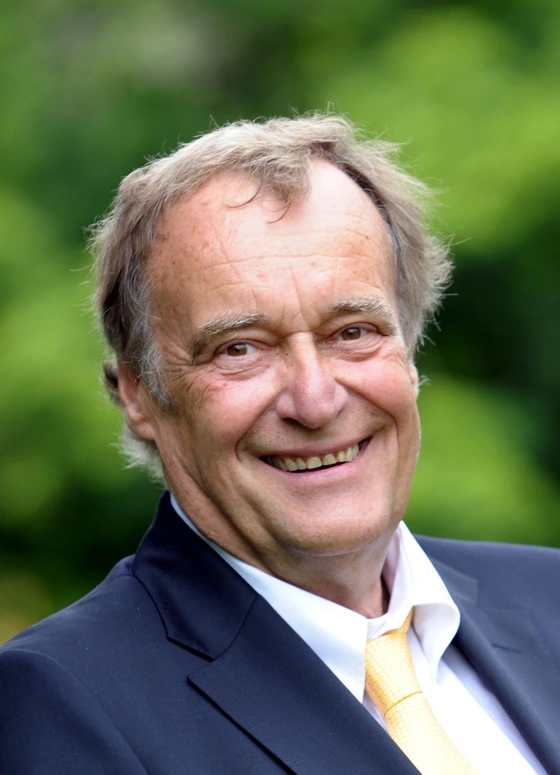
Prof. Dr. med. Dipl.-Psych. Rolf Verres
Emeritus, Institute of Medical Psychology, University of Heidelberg
Dear colleagues,
The REBOUND programme addresses — through the lens of substance use — how young people handle temptation, risk, and peer pressure.
Drugs are often seen as an express train to happiness. Many people simply want to buy a ticket and reach their destination as directly as possible. But the quick satisfaction of needs often leaves a bitter aftertaste — and substance dependency can have devastating consequences for a person's entire life. The drug problem, however, has two sides: demand and supply. Substances are produced, bought, used, misused, tolerated, glorified, prohibited and demonised — and often it comes down to boundary experiences.
Many educators feel helpless because they lack both knowledge about the desire to push boundaries and the right tone for communicating about it. The alcohol excesses of young people are sometimes a sign of alienation between young people and adults — perhaps a symptom of a society that does not do enough to acknowledge young people's need for intensity and ecstasy.
REBOUND is about understanding risk behaviour. We move away from individual-centred interpretations of substance use towards a new paradigm that brings the power of community and social competence into focus. The concept of REBOUND is the result of many years of collaboration between our research group and young people and their educators. Together with nearly 20 doctoral and master's students, we built the empirical foundations. I wish all those involved in the education system much joy and curiosity in discovering this innovative and creative programme.
What is REBOUND?
"Bouncing back — learning from your own experiences and those of others."
In basketball, a rebound means seizing the ball after a missed shot — getting another chance. The name also draws on the Latin "resilire": to bounce back. Together, they capture the programme's resilience-based approach: building inner strength, flexibility, and awareness.
REBOUND is an innovative and rigorous programme for strengthening health competencies. It invites schools, educators, youth workers, psychologists and counsellors to support young people as partners in a cooperative learning process.
Using the topic of alcohol and other drugs as a vehicle, adolescents are guided towards recognising their own strengths (resilience) and vulnerabilities.
REBOUND provides two instruments: a competence-oriented, positive pedagogical approach — and a repertoire of methods that can be learned step by step.
The most important element of REBOUND is the media-educational work with short films. The film scenarios show realistic situations from the lives of adolescents and how they typically respond to the challenges portrayed.
The Programme
REBOUND is an evidence-based prevention programme for risk competence.
Life Skills & Risk Competence Education
REBOUND is an evidence-based programme for building life skills and risk competence in adolescents and young adults aged 14–25.
School Course
5 lessons of 70 minutes each
Teaching Materials
Digital tools and materials for course leaders
School Development
Improved classroom climate, increased engagement and teacher support
Your Path to REBOUND
Choose how to get started
An evidence-based programme, ready for your school
REBOUND was developed as a European project, co-funded by the EU, and is listed on Germany's national registry of prevention programmes ("Grüne Liste Prävention"). A controlled pilot study in Germany evaluated the programme, and it is already used by English-speaking international schools. Adaptations exist in Romania and Mauritius.
Your Path to REBOUND
Inquiry
Contact us to explore whether REBOUND is a good fit for your school and local context.
Training
Your teachers are trained to deliver the programme through a combination of online and in-person sessions.
Implementation
Pilot delivery in your school with ongoing supervision and support from the REBOUND team.
What Your School Gets
Complete Programme
5 lessons with all materials and short films
Teacher Training
Comprehensive preparation combining online and in-person sessions
Ongoing Support
Supervision and guidance during your first delivery
Evaluation Tools
Built-in quality assurance and outcome measurement
Optional: Digital Companion
A lightweight online tool that enhances classroom interaction — no technical skills required.
All materials online
Material library, methods and film exercises — always up to date and accessible anytime.
Student access without names
Students join via QR code with auto-generated nicknames. No registration, no email address.
Live classroom polls
Pre-configured questions for each unit. See aggregated results in real time — perfect conversation starters.
Follow-up reflections
Timed prompts between sessions that deepen learning and provide social norms feedback.
Everything is pre-configured — just scan and go.
Bring REBOUND to Your Country
REBOUND was developed as a European prevention project, evaluated in a controlled pilot study in Germany, and designed for cultural transfer. An English language version exists, and the programme has been successfully adapted in Romania and Mauritius.
What Cultural Adaptation Means
REBOUND's core framework transfers across cultural contexts. Adaptation means making the programme locally relevant while preserving its core:
The core framework — the RICO risk-competence model, interactive methods, and evaluation tools — stays the same
Short films are produced locally with local partners — this is the methodological heart of the programme, showing realistic situations from the lives of adolescents in your country
Programme materials are translated into the local language where needed
Training is adapted to local educator development structures
REBOUND has already been adapted in Romania and Mauritius, and is used by English-speaking international schools. The published evaluation was conducted in Germany; its results do not automatically apply to adapted versions.
The Adoption Journey
Exploration
An initial conversation about your country's context, needs, and the potential fit for REBOUND.
Feasibility Study
Together we assess alignment with local curricula, educational frameworks, and prevention infrastructure.
Cultural Adaptation
Local film production with local partners, materials adaptation, and trainer preparation.
Pilot & Rollout
Supported pilot delivery, scientific evaluation, and a scaling strategy for broader implementation.
Who This Is For
Voices from Practice
Through co-teaching in tandem, I experienced myself in a completely different role. Instead of lecturing, I could observe, listen, and engage with individual students. It showed me how much potential there is in participatory teaching.
Secondary School Teacher
Academic Secondary School, Baden-Württemberg, Germany
1 of 6
Frequently Asked Questions
Key questions about the REBOUND programme
What is REBOUND?
REBOUND is a scientifically evaluated prevention programme that builds risk competence and life skills in adolescents. Developed at the University of Heidelberg and refined over more than a decade, it uses short films, interactive exercises, and group work to help young people understand their own strengths and vulnerabilities. The programme addresses substance use, peer pressure, and risk behaviour — not through scare tactics, but by building genuine competence.
What does REBOUND address?
REBOUND addresses substance use (alcohol, cannabis, and other drugs), risky behaviours, and peer pressure. Rather than simply telling young people to "say no", it builds the underlying life skills: self-awareness, critical thinking, communication, decision-making, and stress management. Using the topic of substance use as a vehicle, the programme develops competencies that benefit young people far beyond the immediate subject.
What evidence supports REBOUND?
REBOUND was evaluated in a controlled pilot study with 723 students aged 14–17 (grades 9 and 10) at five schools in southern Germany (Jungaberle & Nagy, 2015). Directly after the course, participants were significantly less likely than the control group to have had their first experiences of drunkenness (odds ratio 0.55), and their substance knowledge had increased. At academic-track schools, participants used alcohol and cannabis on fewer of the last 30 days. The effects are small, and long-term effects were not measured. The programme is listed on Germany's "Grüne Liste Prävention", the national registry of prevention programmes, which rates REBOUND's effectiveness as "probable".
What age group is REBOUND designed for?
REBOUND is designed for adolescents aged 14–18, typically delivered in secondary school. In Mauritius, the programme comprises five lessons of 70 minutes each, taught in Grade 10. It has been successfully used across a range of school types — from academic-track schools to vocational education settings.
How is REBOUND adapted for different countries?
REBOUND's core framework — the RICO risk-competence model, the short films, and the interactive methods — transfers across cultural contexts. The programme has been adapted in Romania and Mauritius, and English-speaking international schools already deliver REBOUND in English. Adaptation involves working with local partners to align the programme with national curricula, produce local short films, and ensure the training fits local educator development structures. The pedagogical approach remains the same; the published evaluation was conducted in Germany.
How do we get started?
Start with a consultation to explore whether REBOUND fits your school or organisation. We'll assess your context, discuss how the programme can be adapted, and outline next steps — from feasibility to training and pilot delivery. Contact us to schedule a conversation.
Have more questions? Get in touch
Bring REBOUND to Your School
In a free consultation, we'll explore together whether and how REBOUND fits your school or organisation.

Mandy Martusewitsch, M.Sc.
Your contact person
mandy.martusewitsch@finder-akademie.de+49 (0)30 754 395 750